A common question for parents and caregivers is simple: When should a child first go to the dentist? In most cases, the first dental visit should happen by the first birthday or within 6 months of the first tooth appearing, whichever comes first. That may sound early, but it reflects how quickly tooth decay can begin and how much can be learned from a brief preventive visit.
Early childhood tooth decay remains one of the most common chronic diseases in children. What may begin as a faint white spot near the gumline can progress to a cavity, pain, sleep disruption, difficulty eating, and sometimes infection. Dentists recommend early visits not to create unnecessary treatment, but to catch small changes before they become painful, costly, or harder for a child to tolerate.
There is also a broader public health lesson here. Communities with limited access to preventive dental care often see more emergency visits for dental pain, more untreated cavities, and more school absences related to oral health problems. In that sense, the first dental visit is not just about one tooth. It is an early checkpoint for a child’s growth, comfort, nutrition, and daily functioning.
At Encore Dental Studio in Winston-Salem, NC,, families can expect a calm, child-focused approach to pediatric dentistry. Early visits give parents guidance on brushing, fluoride, feeding habits, and cavity prevention while helping children become comfortable with dental care in a supportive setting.
The age-one recommendation is rooted in prevention. Once teeth erupt, they are exposed to bacteria, dietary sugars, and normal wear. Baby teeth, also called primary teeth, have thinner enamel than adult teeth, so decay can spread faster than many families expect.
At an early visit, a dentist is usually looking for a few key things: how the teeth are erupting, whether there are early signs of enamel weakness or decay, how the jaws are developing, and whether feeding or comfort habits may be affecting oral health. This is also the right time to discuss fluoride exposure, brushing technique, and realistic ways to lower cavity risk without turning oral care into a daily struggle.
Many people assume baby teeth matter less because they eventually fall out. Clinically, that is not true. Primary teeth help with chewing, speech development, facial growth, and holding space for adult teeth. When they are lost too early because of decay or infection, the effects can extend well beyond the mouth.
The early phase of dental disease in children is often quiet. A child may not complain, and a cavity may not be visible to an untrained eye. The first sign may be chalky white areas, yellow or brown discoloration, or sensitivity to cold foods. By the time there is obvious pain, the problem may already be deeper. For help identifying early warning signs, see signs of a cavity.
This timeline matters. Decay can move from the outer enamel into the softer inner layer, called dentin, and then toward the pulp, which contains the tooth’s nerve and blood supply. Once that happens, a child may develop significant pain, swelling, trouble sleeping, or avoidance of chewing on one side. Families often notice cold sensitivity early as the tooth becomes more irritated.
From a practical standpoint, delayed care can also shape how children feel about dentistry. A calm first visit for an exam and guidance is very different from a first visit that happens during pain, infection, or an urgent procedure. That is one of the strongest arguments for early evaluation: it helps make dental care familiar before it becomes stressful.
Even if a child has already had a first dental visit, some symptoms should prompt an earlier appointment. Tooth pain, visible holes, dark spots, or gum swelling are not things to watch for months. They may reflect decay, trauma, irritation, or infection and deserve timely assessment.
Other reasons to schedule a dental evaluation include persistent bad breath, bleeding gums that continue despite gentle brushing, sensitivity that keeps returning, white or brown marks on the teeth, or a child avoiding certain foods because chewing seems uncomfortable. Mouth injuries also deserve attention, especially if a tooth becomes loose after trauma, changes color, or the lip or gum is deeply cut.
Seek emergency care if there is facial swelling, fever with dental pain, pus near a tooth, trouble swallowing, trouble breathing, or a child who cannot rest, eat, or drink because of oral pain. Those are urgent red flags because infection in the mouth can sometimes spread beyond the tooth and surrounding gum tissue.
If pain prevents sleeping or daily activity, consider resources on extreme tooth pain.
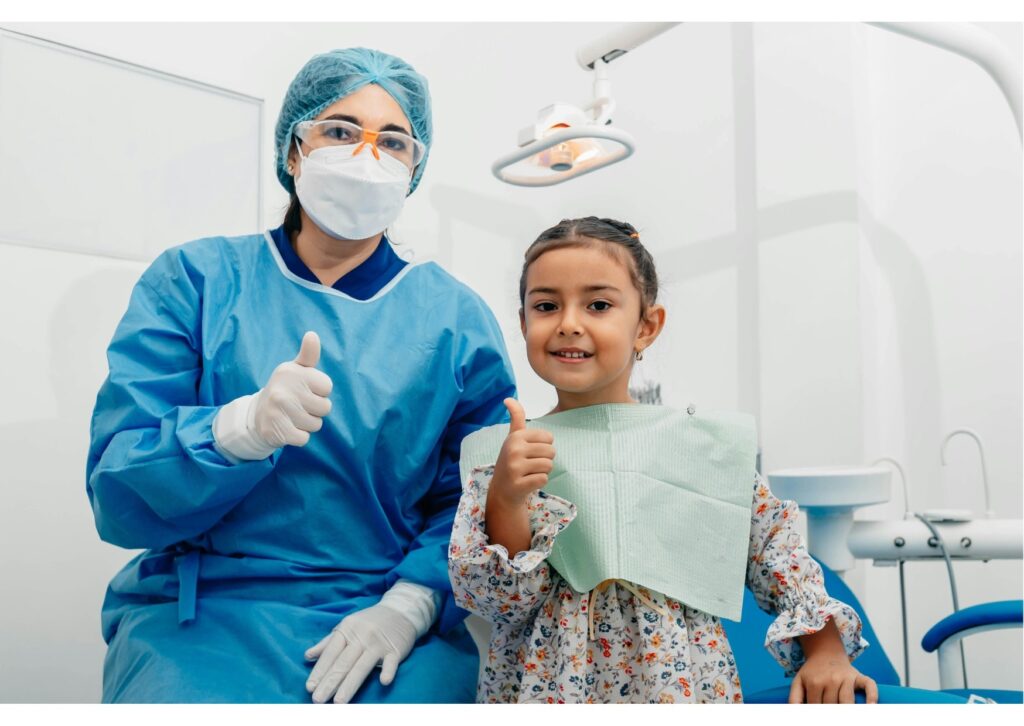
For infants and toddlers, the first visit is often short, gentle, and focused on prevention. The dentist may examine the teeth, gums, bite, and oral tissues while the child sits on a caregiver’s lap. In many offices, this is done in a knee-to-knee position, which allows the dentist to look carefully while the child stays close to a familiar person.
The discussion is often just as important as the exam. A dentist may ask about bottle use, breastfeeding or formula feeding patterns, overnight feeding, pacifier use, thumb sucking, brushing habits, fluoride sources, and family cavity history. That conversation helps identify risk patterns early, before visible disease develops.
If the child is older, the visit may include a cleaning & exam, photographs, or X-rays when clinically appropriate. Not every child needs the same steps at the same age. The goal is to match the visit to the child’s development, cooperation, and risk level rather than forcing a one-size-fits-all approach.
The first birthday is the standard benchmark, but some children may benefit from earlier attention. This can apply when teeth erupt very early, when there are visible enamel defects, when a child has special health care needs, or when a caregiver notices staining, unusual tooth shape, or feeding-related concerns.
Cavity risk is not evenly distributed. Children who frequently sip juice, fall asleep with milk or sweetened liquids, snack often on sticky carbohydrates, or have difficulty with daily brushing may need closer follow-up. A family history of significant tooth decay can matter too, because the oral bacteria associated with cavities often circulate within households.
There are also developmental reasons for monitoring. Prolonged thumb sucking or pacifier use may affect the bite in some children, and mouth breathing may be associated with dry mouth, gum irritation, or changes in facial growth patterns. These issues do not always require treatment right away, but they are worth discussing early so families understand what to watch for.
It is tempting to think of baby teeth as temporary placeholders, but that view misses their clinical importance. Primary teeth guide adult teeth into position, support normal chewing, and help children form speech sounds clearly. They also contribute to confidence during a period when eating, smiling, and social development are closely connected.
Untreated decay in baby teeth can lead to pain, infection, missed school or daycare, poor sleep, and difficulty eating enough nutritious food. In some cases, inflammation from diseased primary teeth can affect the developing adult teeth beneath them. That does not mean every cavity causes long-term harm, but it does mean these teeth deserve timely care.
Historically, one of the most damaging misconceptions in children’s oral health has been the idea that waiting is harmless because the teeth will fall out anyway. In reality, delayed care often turns a preventable problem into a more serious one.
Preparation helps, but tone matters. It is usually best to describe the dental visit in simple, neutral language rather than promising that nothing uncomfortable will happen. Children often do better when adults stay calm, avoid dramatic reassurance, and treat the appointment as a normal part of health care.
Choose a time of day when the child is usually rested and fed. Bring a comfort item if the office allows it, and be ready for the visit to move at the child’s pace. Some children cooperate right away. Others need a few visits to build familiarity. That variation is normal.
It also helps to avoid using the dentist as a threat or a reward. Framing oral care as routine health maintenance creates a healthier long-term relationship with treatment than language based on fear, bribery, or blame.
Some families wait because there are no visible problems. That is understandable, but it is exactly why the age-one visit exists. The earliest stages of decay may be subtle, and preventive guidance is most useful before habits are firmly established.
Others wonder whether teething symptoms mean a dental visit is needed. Mild gum irritation, drooling, and a desire to chew are common with teething. But high fever, significant swelling, refusal to drink, facial asymmetry, or symptoms that seem out of proportion to routine teething deserve medical or dental evaluation because they may point to something else. For specifics on fever and teething, see teething and fever and teething stages.
Another common question is whether a general dentist is enough or whether a pediatric dentistry practice is necessary. Many general dentists are comfortable seeing young children, especially for routine preventive care. A pediatric dentistry practice has additional training in child development, behavior guidance, and more complex pediatric dental needs. The right choice often depends on local availability, the child’s risk level, and how comfortable the office is with very young patients.
The history of childhood tooth decay is, in many ways, a history of preventable disease being normalized. Pain with eating, visible cavities in toddlers, and emergency visits for infected teeth should never be treated as inevitable parts of childhood. They are signs that prevention started too late, access was limited, or early warning signs were missed.
Modern dentistry has moved toward earlier risk assessment for a reason. Preventive care is usually simpler, less invasive, and more humane than waiting for symptoms to force action. That principle applies in clinics, schools, and public health programs alike.
If the question is when to take a child to the dentist, the safest general answer is early, ideally by age one, and sooner whenever symptoms, trauma, or visible changes raise concern. That timing gives families the best chance to prevent disease rather than react to it.
Protecting your child’s smile starts with early, preventive care. If you are looking for trusted pediatric dentistry in Winston-Salem, our team at Encore Dental Studio is here to provide compassionate care in a comfortable, family-friendly environment. Call (336) 774-1771 today to schedule your child’s dental visit and get personalized support for healthy smiles at every stage of development.
Yes. In most cases, the first visit should happen by the first birthday or within 6 months of the first tooth coming in. That allows early screening for decay risk, tooth eruption patterns, and home care habits.
A dental check can still be reasonable if teeth have not erupted by around the first birthday, especially if there are other developmental concerns. A dentist can decide whether simple monitoring is enough or whether further evaluation makes sense.
No. A toddler visit is often preventive and brief. Early appointments are usually easier than visits that happen only after pain or visible cavities develop.
Book sooner if there is tooth pain, gum swelling, a chipped or injured tooth, dark spots, white patches on teeth, persistent bad breath, or bleeding that keeps happening. Seek urgent care for facial swelling, fever with dental pain, pus, trouble swallowing, or trouble breathing.
Often, yes. Baby teeth help with chewing, speech, comfort, and spacing for adult teeth. Untreated disease in primary teeth can still cause pain, infection, and problems with normal development.

Whether you need immediate emergency care, a same-day crown, or a routine dental checkup, Encore Dental Studio is here for you.