Whiter teeth did not become a common goal by accident. Over time, coffee, tea, tobacco, red wine, and deeply pigmented foods made surface stains more noticeable, while photos, video calls, and cosmetic dentistry made smile appearance more visible.
That shift created a flood of teeth whitening options, from pharmacy strips to in-office bleaching. Some work well and predictably. Others are poorly matched to the cause of discoloration, which is often where disappointment and avoidable sensitivity begin.
The first lesson is simple: whitening works best when the stain is external, the teeth are healthy, and the treatment matches the type of discoloration rather than the latest trend.
Encore Dental Studio in Winston-Salem offers professional teeth whitening and related cosmetic care that may be what you're looking for.
Not all tooth discoloration is the same. That matters because whitening products mainly help with certain stain patterns, not every reason a tooth looks darker, yellower, grayer, or uneven.
Dentists often separate discoloration into extrinsic and intrinsic staining.
Extrinsic stains sit on the outer tooth surface and are commonly linked to coffee, tea, tobacco, chlorhexidine mouthrinse, or plaque buildup. Intrinsic stains develop within the tooth structure and may be related to aging, trauma, enamel wear, some medications taken during tooth development, or changes inside the pulp, the soft tissue in the center of the tooth.
Yellowing often responds well to bleaching. Gray, brown, banded, or single-tooth darkening is usually less predictable and may call for a different approach. That is one of the most important points patients miss when comparing whitening choices online.
If one tooth has changed color, especially after an injury or old dental work, that deserves a dental exam before cosmetic treatment. A single dark tooth can point to an internal dental problem, not just a cosmetic stain.
Earlier cosmetic care focused more on polishing away surface stains than changing the internal color of teeth. As peroxide-based systems became more common, dentistry gained a more reliable way to lighten tooth shade beyond a simple cleaning.
That progress helped many patients, but it also blurred an important distinction. A dental cleaning removes plaque, tartar, and some external stain. Bleaching changes tooth color chemically. Whitening products are often marketed as if they do both equally well, which is not accurate.
Today, patients can choose from in-office treatment, custom trays from a dentist, over-the-counter strips, paint-on gels, whitening toothpaste, and restorative options such as bonding or veneers. Each option has a place, but they are not interchangeable.
In-office whitening is usually the fastest way to see a visible change. A dental team protects the gums, applies a bleaching agent, and monitors the process closely. That can be especially helpful for patients with a deadline, uneven staining, or a history of sensitivity.
This option offers the most controlled setting, but it is not automatically the best fit for every smile. Existing crowns, fillings, and veneers do not whiten the same way natural teeth do, so color mismatch may become more noticeable after treatment.
Custom trays combine professional oversight with slower, steadier whitening. Because the trays are shaped to your teeth, the gel usually contacts the enamel more evenly and leaks onto the gums less than many one-size-fits-all products.
For many patients, this is the most balanced option. It often delivers strong results with more flexibility, especially after a dentist has checked for cavities, gum recession, cracked teeth, and restorations that could affect comfort or appearance.
Pharmacy whitening strips can work well for mild to moderate generalized staining. They are easy to find and usually cost less, but fit and consistency vary. They may also miss curved areas or irritate the gums if used carelessly.
Results are usually less tailored than professional systems. Patients with crowding, patchy discoloration, exposed root surfaces, or significant sensitivity often find that store-bought products are less predictable.
Whitening toothpaste usually helps by removing some surface stain rather than deeply bleaching the tooth. That can be useful for maintenance after professional whitening or for patients whose main issue is fresh external staining from coffee or tea. For expectations about longevity, see how long whitening lasts.
These products are often oversold. Whitening toothpaste usually does not change the internal shade of teeth very much, and highly abrasive formulas may worsen wear over time if used too aggressively.
Some teeth are poor candidates for bleaching alone. Deep internal discoloration, enamel defects, fluorosis, old trauma, or large visible restorations may be better managed with bonding, veneers, or crowns, depending on the tooth and how much structure remains.
These are not whitening treatments in the strict sense. They are restorative or cosmetic cover solutions that require careful planning because they alter or replace visible tooth surfaces rather than simply lightening them. For a closer look at benefits and trade-offs, see pros and cons of veneers. You may also want to understand whether veneers are permanent before choosing that path.
Whitening should not be the first move when your mouth is sending warning signs. Tooth pain, lingering sensitivity to temperature, gum swelling, visible cavities, broken fillings, or a recently darkened tooth may point to problems that need diagnosis first.
This is where safe decision-making matters more than speed. Bleaching a tooth with decay, a crack, or pulp inflammation can increase discomfort and delay the right treatment.
A dental evaluation is also wise when discoloration is uneven, sudden, or limited to one area. In some cases, what looks like staining is actually enamel loss, tartar buildup, developmental discoloration, or the shadow of old dental work.
Urgent dental assessment is important if a dark tooth is paired with pain, swelling, drainage, fever, or facial fullness. Those signs may reflect infection or internal tooth damage rather than a cosmetic issue.
The most common short-term issue is tooth sensitivity. Teeth may feel zinging, cold-reactive, or briefly sore during or after whitening, especially if enamel is thin, roots are exposed, or whitening is pushed too quickly.
Gum irritation can also happen when bleaching material contacts soft tissue. This is one reason professionally fitted systems are often easier to tolerate than loosely fitting products.
Color changes are not always perfect, even at first. Teeth with white spots, previous trauma, fillings, or natural variation in enamel thickness may lighten unevenly, at least initially.
It is also worth setting one realistic expectation. Whitening can improve many smiles, but it does not make every tooth paper-white, and it does not change the color of crowns, veneers, fillings, or bonding.
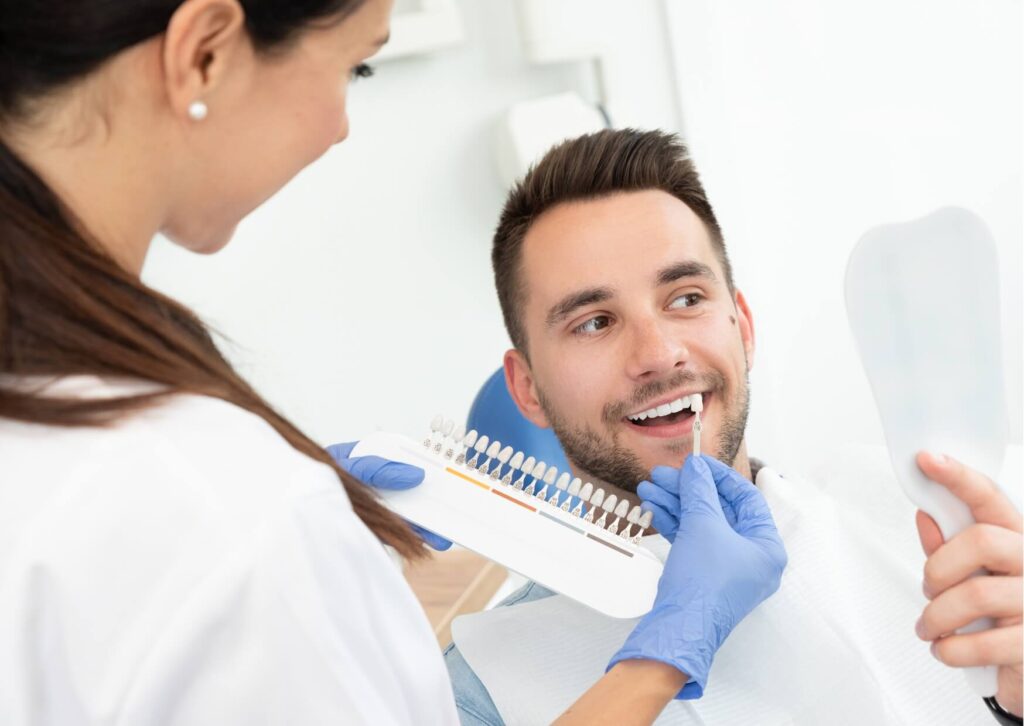
If your teeth are generally healthy and the staining is mild and widespread, over-the-counter products may be enough. If you want a more noticeable change, or if your smile includes restorations, sensitivity, uneven color, or a history of dental problems, professional guidance is usually the safer and more efficient route.
A simple way to think about it is this: the more complex the discoloration, the more valuable an exam becomes. That is especially true for smokers, heavy coffee or tea drinkers, patients with gum recession, and anyone with one tooth that looks different from the rest.
Timing also matters. Whitening before bonding, veneers, or front-tooth fillings may help the final shade match more naturally, while whitening after visible restorations may reveal color differences that need correction. Budget matters too, so it can help to review the cost of teeth whitening when weighing your options.
The story of whitening follows a familiar pattern in health care. Public demand rises quickly, products multiply, and marketing starts speaking louder than diagnosis. That is when simple cosmetic goals can lead to poor choices, especially when every stain is treated as if it has the same cause.
The better lesson is more measured. A brighter smile is a reasonable goal, but the safest results come from understanding why teeth look discolored in the first place and choosing a method that fits that pattern.
If whitening is on your list, start with the condition of your teeth, not the advertisement. That extra step often helps prevent sensitivity, wasted money, and missed dental disease.
A dentist can help sort out whether bleaching, stain removal, or a restorative option makes the most sense before you commit to treatment.
If you're considering professional teeth whitening, Encore Dental Studio in Winston-Salem (serving patients from nearby Greensboro and High Point) can help. Call us at (336) 774-1771 to schedule.
In-office whitening usually works fastest because the process is supervised and designed to create a visible change in a short time. Fast does not always mean best, especially if your teeth are sensitive or the discoloration is unlikely to respond well to bleaching.
Whitening strips can help with mild to moderate surface-related discoloration, but they are usually less customized and less predictable than dentist-supervised treatment. Professional care is often better for uneven staining, restorations, sensitivity, or a more noticeable color change.
When used appropriately, whitening is generally considered safe, but it can cause temporary sensitivity or gum irritation. It is smart to get a dental evaluation first if you have pain, a cracked tooth, untreated decay, or unexplained darkening.
A single dark tooth may be related to prior trauma, internal changes in the tooth, old dental work, or other causes that bleaching may not fix. Because it can signal a deeper problem, that pattern should be checked by a dentist before cosmetic treatment.
No. Crowns, veneers, fillings, and bonding do not whiten like natural teeth, so shade mismatch can become more noticeable after bleaching.
See a dentist first if discoloration is sudden, limited to one tooth, painful, worsening, or associated with swelling, fever, drainage, or broken dental work. An exam is also wise if the cause of staining is unclear or symptoms have been persistent.

Whether you need immediate emergency care, a same-day crown, or a routine dental checkup, Encore Dental Studio is here for you.