Have you ever felt a strange sensitivity tucked between two teeth and wondered if it could be something more?
Cavities that form between teeth often go unnoticed in their early stages because they hide in places most people don’t see or clean well. These interproximal cavities develop quietly, sometimes for months, before you feel anything unusual.
This comprehensive guide will walk you through everything—from the earliest warning signs to advanced detection and treatment options. You’ll also discover how Encore Dental Studio in Winston-Salem provides modern solutions to diagnose and treat these subtle yet damaging cavities with precision and care.
Cavities between teeth are sneaky… forming quietly in tight spaces most people struggle to clean well. Let’s break down the tell-tale indicators that something might be wrong beneath the surface..
A cavity between teeth, also known as interproximal decay, forms in the narrow space where two teeth meet. Because toothbrush bristles can’t reach these tight spaces, harmful bacteria often settle there.
While surface cavities appear on the visible chewing surfaces and root cavities form near the gumline, interproximal cavities develop in harder-to-detect areas—making diagnosis trickier.
The small spaces trap food debris, plaque, and sugars. Over time, acids produced by bacteria soften the enamel, leading to decay.
Plaque is a sticky bacterial film that constantly forms on teeth. When fed with sugar, these bacteria release acids that erode enamel—eventually creating cavities.
Enamel naturally thins between the teeth, and without proper interdental cleaning, these weak spots become prime targets for decay.
Skipping flossing even occasionally increases the risk of plaque buildup and decay between teeth—especially in tight spaces.
A mild zing when sipping coffee or cold water may be an early indicator of enamel loss between teeth.
If floss catches or causes discomfort, decay may be developing beneath the surface.
A faint brown or gray shadow can be one of the earliest visible signs of a cavity between teeth.
As the cavity enlarges, discoloration becomes more apparent on the sides of the affected teeth.
Advanced cavities may create visible openings—tiny pits that trap food more frequently.
Decaying tooth structure often produces unpleasant odors or tastes.
Sweet treats or acidic drinks can trigger sharp discomfort—often a strong sign decay has spread deeper.
Persistent throbbing or dull aches may mean the cavity is moving toward the dentin layer.
What begins as a mild irritation can progress into significant tooth sensitivity.
These cavities form in areas naturally blocked from view—even with good lighting and mirrors.
Bitewing X-rays can detect decay between teeth long before symptoms appear.
Dentists at practices such as Encore Dental Studio use specialized tools and imaging technology to evaluate early enamel breakdown.
Inflammation along the gumline can signal bacterial buildup between teeth. Tender gums often accompany early decay.
If food consistently sticks in the same place, it may indicate the enamel is weakening or small openings are forming.
Cavities can widen the contact area, creating gaps or dark lines that weren’t there before.
Flossing removes plaque your toothbrush can’t reach. Without it, cavities form more easily and frequently.
Snacking on sweets or sipping soda throughout the day bathes teeth in destructive acids.
Misaligned teeth create more hiding spots for plaque and make cleaning more challenging.
Dentists examine your teeth for color changes, plaque buildup, and structural wear.
X-rays show the depth, width, and location of hidden cavities with remarkable clarity.
Some practices use lasers to detect weakened enamel long before physical symptoms begin.
Brush twice daily with a soft-bristled toothbrush and floss thoroughly once a day. Good technique is key—slow, gentle, and consistent.
Fluoride strengthens enamel like reinforcing beams added to a structure.
Professional cleanings remove hardened tartar that brushing alone can’t tackle.
Composite resin matches your natural tooth color and restores structure seamlessly.
When decay is extensive, stronger restorations help reinforce tooth integrity.
Sealants provide added protection on surfaces prone to plaque buildup.
Good oral hygiene keeps newly restored teeth strong and prevents future decay.
Soft, sugary foods cling to your teeth—fueling bacterial growth.
Follow-up visits allow your dentist to monitor healing and stop new decay early.
Dental hygienists use specialized instruments that access plaque deep between teeth and below the gumline.
Daily flossing removes up to 40% of plaque—a critical step often overlooked.
These tools are perfect for people with tight spaces, braces, or bridges.
Swollen gums can cover or conceal decay as it develops between teeth.
Where there is gum disease, bacteria thrive—making a cavity more likely.
Healthy gums protect the roots of your teeth and reduce inflammation that contributes to enamel breakdown.
Untreated cavities eventually reach the pulp, causing pain and infection.
If decay continues unchecked, abscesses may form—leading to tooth loss.
Early treatment is simple; delayed treatment is often more invasive and costly.
A root canal removes infected tissue and saves the natural tooth.
Crowns offer strength and protection after extensive decay.
Implants restore chewing function and maintain bone health.
Keeping sugar intake low reduces bacterial activity dramatically.
These minerals remineralize enamel and strengthen teeth.
Saliva naturally washes away food particles and neutralizes acids.
A consistent routine keeps plaque at bay and prevents future issues.
Routine checkups catch small problems before they grow.
Your dentist may recommend fluoride varnishes, sensitivity pastes, or specialized floss.
Digital imaging allows dentists to catch small cavities quickly and safely, with less radiation.
Laser tools highlight early enamel breakdown with remarkable accuracy.
Encore Dental Studio utilizes advanced diagnostic systems to track your oral health, ensuring cavities are caught early and treated effectively.
Exceptional dental care is closer than you think. At Encore Dental Studio, patients receive modern, compassionate, and comprehensive dentistry designed to keep smiles healthy at every stage of life. Located at 755 Highland Oaks Dr STE 106, Winston-Salem, NC 27103, we offer services such as preventive cleanings, same-day crowns, emergency dentistry, fillings, and advanced cavity detection.
Open Monday through Thursday from 8 AM to 4:30 PM (closed Friday–Sunday), our team prioritizes comfort and efficiency. Whether you’re experiencing signs of a cavity between teeth or simply due for a checkup, Encore Dental Studio is ready to help.
Take the first step toward a healthier, brighter smile—your smile deserves the very best.
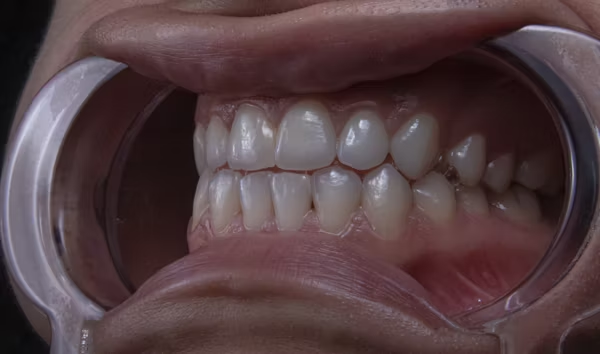
Interproximal cavities often hide in plain sight, quietly progressing until symptoms appear. Understanding the early signs of a cavity between teeth empowers you to seek treatment early—preventing pain, restoring function, and protecting your long-term oral health.
If you’re concerned about any changes or discomfort, don’t wait. Encore Dental Studio in Winston-Salem offers expert care and state-of-the-art technology to help you maintain a strong, confident smile.
Contact us now.
Sensitivity, food getting stuck, discoloration, or gum tenderness may indicate a cavity. X-rays provide the most accurate diagnosis.
Brushing cleans the surfaces of teeth, but only flossing removes plaque between them—a key area where interproximal cavities form.
No. Many remain painless until reaching deeper tooth layers.
Treatments range from fillings to crowns or root canals depending on severity.

Whether you need immediate emergency care, a same-day crown, or a routine dental checkup, Encore Dental Studio is here for you.